

Embodied Teleoperation and its Application to Safety Critical Systems
Future robotics should not be defined only by increasing autonomy, but also by the development of systems that can collaborate effectively with humans. In safety-critical and remote domains, such as healthcare, disaster response, industrial inspection, remote exploration, and defense, robots must be able to communicate, coordinate, and respond to human intention in safe and reliable ways.
My research proposes a human-centered approach to embodied teleoperation. The goal is to enable operators to control robotic systems through responsive interaction, multimodal feedback, and improved situational awareness. Here, human-centered refers to systems that preserve human agency, support informed decision-making, and reduce the cognitive and physical burden on the operator.
My research extends and seeks to practically realize Minsky’s original vision of telepresence, which was to enable humans to interact with remote environments through telepresence in such an intuitive and immersive way that they could feel and act as if they were physically present. Given that perfect telepresence is unlikely to be achieved and is not economically feasible in the near future, my research examines alternative ways to enable effective teleoperation. In particular, it explores how applied artificial intelligence can compensate for the limitations of conventional input devices and transform widely available interaction technologies into adaptive, intelligent, and scalable interfaces for remote operation. This could mark a “ChatGPT moment” for teleoperation: a shift from highly specialized and infrastructure-intensive systems toward broadly accessible remote operation.
Many of these challenges highlight the social dimension of telepresence: enabling remote presence in situations where human-human and human-machine interactions need to be supported, complemented, or extended through technical systems and autonomous functions.
My research will focus on two closely connected directions:
First, I will develop methodological foundations for understanding and investigating the sense of telepresence in teleoperation, using model-based shared control as a principled approach to support safety-by-design rather than relying solely on black-box automation. This approach will foster system reliability by enabling virtual validation of security-related and safety-critical applications.
Second, I will develop predictive digital twins and physics-informed AI-models that can compensate for missing feedback modalities when operators are not physically present and cannot fully see, feel, or perceive the remote environment. This will include not only haptic and visual feedback, but also other interaction modalities depending on the application context and societal need. In addition, I will investigate safety-by-design principles for medical, and rehabilitation applications (e.g. remote diagnostics) that involve interaction with vulnerable users.
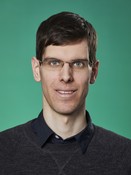
Dr.-Ing. Balint Varga
- Head of Research Group
- Group:
- Room: 105
- Phone: +49 721 608-42467
- Fax: +49 721 608-42707
- balint varga2 ∂does-not-exist.kit edu
Karlsruher Institut für Technologie (KIT)
Campus Süd
Institut für Regelungs- und Steuerungssysteme
Geb. 11.20 (Engler-Villa)
Kaiserstr. 12
D-76131 Karlsruhe
Curriculum Vitae
Balint Varga studied mechatronics at the Budapest University of Technology and Economics (BME) with the specialisation in „Mechanical Modelling“ from 2011 to 2015. He finished his master studies as a mechanical engineer at Karlsruhe Institute of Thechnology (KIT), in the field of „theoretical mechanical engineer„ . He wrote his master thesis entitled “Modellpredictive control of a demonstrator vehicle” at the FZI. Since Oktober 2017 he is employed as a research scientist at FZI.
From July 2020 to March 2023 research associate at IRS. PhD on the topic of cooperative control with limited information. Since March 2023 group leader.