Enabling Semantic Convergence
- Subject:Use of semantic IDs (IRDI/IRI) and a decentralised semantic-description-service concept that lets agentic systems verify the full-text description behind a concept
- Type:Master's thesis
- Date:16.07.2026
- Supervisor:
- Links:Tender
-
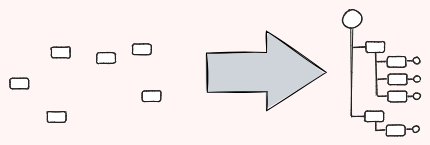
This Master's thesis extends a proxy server that provides concept descriptions on the web with the API for digital twins. An AAS environment can deposit descriptions there when they do not yet exist. Several such servers form a network in which they hold meanings for each other. This lets agentic systems better verify what a concept actually means.
MOTIVATION:
My understanding of an electric motor may differ from yours. But anyone describing components needs a shared meaning everyone can agree on. Normally, industry-wide catalogues take on this job, defining what a given term means. Yet in borderline cases these catalogues lack precisely what engineers want to express. A decentralised system should make it possible to fill these gaps and allow different meanings to exist side by side. Concepts can be referenced via IDs on the web. Originally this was enough to look up a meaning once. Today, software-supported systems such as AI agents increasingly want to check the full text behind a concept. A decentralised service for such descriptions is to be investigated to see what it can offer these systems.
OBJECTIVES:
First, the state of the art of semantic IDs, IRDI/IRI referencing and existing concept repositories is analysed. Building on this, the concept of the CDD proxy app and concept store is extended with the AAS API, so that an AAS environment can deposit concept descriptions there when they do not yet exist. Subsequently, requirements are formulated that the proxy-cache network must meet so that several servers can mutually hold meanings. These requirements are validated using a prototype, so that it can be assessed to what extent agentic systems benefit from the semantic layer of a factory.
HELPFUL PRIOR KNOWLEDGE:
- Little hesitation about programming and rapid software prototyping
- Strong interest in fundamental concepts of model theory
- Interest in the interoperability of information-model-based systems